• Story
  • System Progression
  • Dungeon Survival
  • LitRPG

You Clicked Accept

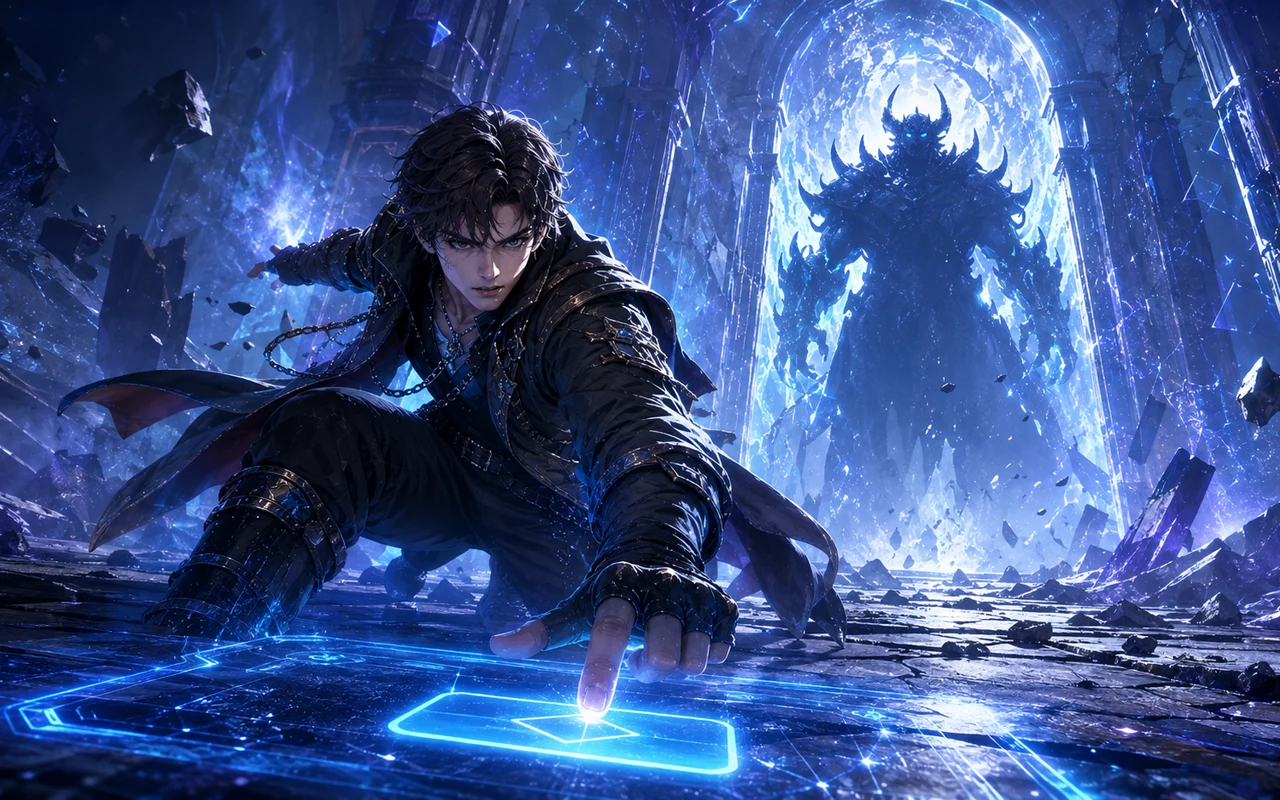
You swatted a blue floating window at minute forty-one of a routine gate run. The return seal went matte. The text reads: REMAINING: 17.

Nineteen years into the gate era, awakening is just paperwork and cheap labour. You are a carry—an unawakened porter paid by weight in the Sixth Ward. But when a pale blue window opens over a return line and you accidentally tap ACCEPT, the seal locks, trapping you inside with a D-rank fighter and an extra headcount the survey never listed. There are no stat screens or levels here: the panel is a contract engine that grants reality to the literal letter, charges payment directly out of your life, and never lets you close a term for free.

Play

Player discussion

How to play

  1. You open forty-one minutes into an E-grade clearance, sealed inside the gate with four bags of nodefall roped across your shoulders: the way out has gone matte, a blue panel only you can see reads REMAINING: 17 where the survey said fifteen, and the fighter in here with you has her light in your face asking what you just did. The first move is whatever you type.
  2. After that you write freely every turn: a line you say to somebody, a question you put to the panel, something you do, or a whole paragraph of your own narration — and three suggestions sit under each turn for when you would rather not start from nothing.
  3. When a stretch has gone as far as it can, hit Advance the story and it jumps forward; chapters close and file themselves as you go, and the next one opens on a ward that kept posting grades while you were deciding.

What makes it different

Your weapon is the wording. The panel honours terms to the letter in both directions and will show you the full text of anything on request, so you can argue a clause, exploit a literal reading, talk a price down, or refuse and take the forfeiture it wrote out for you first. There are no levels, no stat sheets and no experience bars: what a term pays out is a thing you can point at, and what it charges is taken out of your actual life.

Nobody else can see it, and everything around you is a licensed industry with paperwork. A helmet camera records a rectangular hole where a panel stands, which is how Recovery finds people like you; the ward's gates keep posting a grade low and cheap crews keep signing; and anything you write into your own past — a debt, a person, an old job — this ward takes as though it had always been there, and somebody uses it the same turn.

Frequently asked questions

Do I need to pay to play You Clicked Accept?
You get 100 free credits when you sign up, and credits never expire. The game spends credits only when it generates new AI content, based on actual usage — there's no fixed per-round fee and no subscription required to start.
What kind of game is this?
An open-ended novel you write with an AI. You play a gate-crew carry who has just accepted something nobody else can see, you type in your own words, and the AI writes the world back at you in real time — no multiple-choice options, no dice, no stat sheets.
What can I type?
Anything: a line of dialogue, a question put straight to the panel, something you do, or a whole paragraph of prose. Each message has two destinations — Continue story puts it into the book as written, while Direct the AI passes a private note to the storyteller about where you want this to go. There are also three suggested openings under every turn if you would rather pick than write.
Does the story ever end? How long can I play?
There is no ending, no last floor and no boss. The panel cannot be destroyed or switched off, and the gates do not close. Chapters fill up, close and file themselves, and the next one opens on a ward that kept running — so it lasts as long as you keep writing, and you can leave it for weeks and pick it up where you left off.
Do I need other players?
No. It is single-player; the AI plays everyone else — the fighter sealed in with you, your crew boss, the Recovery officer, the broker in the yard, the carry in the next bunk, and the woman at the laundromat who has had one of these for seventeen years.
Is anything I write kept?
Yes. The story saves as it goes and archives chapter by chapter, so you can open the directory and reread any of it. Terms you accept, clauses you argue down and people you bring in keep working later; the prices you agreed to come due long after you agreed to them.
Is there a Chinese version?
Yes — Simplified Chinese and English, the same ward and the same people, each written for its own readers rather than translated line for line.