• Story
  • Surveillance Thriller
  • State Paranoia
  • Evidence Chain

Proof That Lies

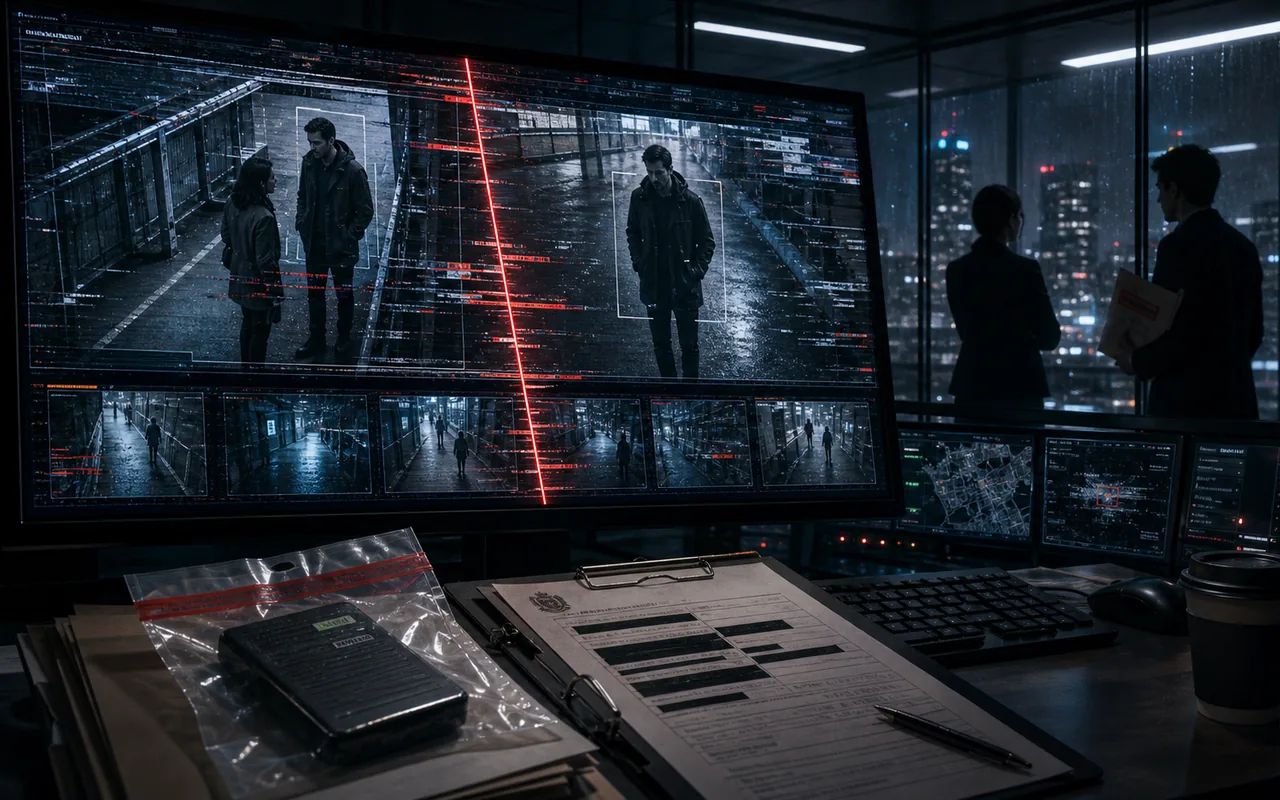
Halstrow precinct, 2:00 AM. The official footage on your screen has been clean-certified.

You're the night-shift digital evidence custodian beneath Marsh Lane. At ten past ten, an officer hands you a 'corrected' video file for a high-profile case, completely sanitized by authorities. Nobody threatens you; everyone follows protocol. But you saw the raw tape before it was scrubbed. Armed only with chain-of-custody logs and forgotten system archives, will you sign off on the lie?

Play

Player discussion

How to play

  1. You open at twenty past ten on a wet Thursday night in the exhibits room, with an assurance officer standing at your bench, a pen an inch from your hand, and a corrected version of the Fen Road footage that is served on the prosecutor at nine — and your first move is whatever you type.
  2. After that you write freely every turn: a line you say out loud, a record you go and pull, a form you refuse to sign, or a whole paragraph of your own narration — and three suggestions sit under each turn for when you would rather not start from nothing.
  3. When a scene has gone as far as it can, hit Advance the story and it jumps forward; chapters close and file themselves as you go, and the next one opens on a Halstrow where the paperwork kept moving while you were deciding.

What makes it different

Nothing here is a fake and nobody is lying to you. What lands on your bench is a certified version, made by people with the legal power to certify, and it is better footage than the original — steadier, cleaner, with the timestamp running unbroken. The truth only shows in the paperwork around it: seal numbers, transfer dockets, hashes, a signature by somebody who was on annual leave — and in the systems nobody remembers to correct, like a contractor's door log or a launderette's own camera.

Everything you hold can be issued again, including your own movements. A copy only you have is not evidence, it is an allegation against you; a copy in somebody else's hands in another building is the only kind that survives. And nobody ever threatens you. They explain, they apologise, they bring you a coffee and do you a favour — and each time, there is one more door your card does not open.

Frequently asked questions

Do I need to pay to play Proof That Lies?
You get 100 free credits when you sign up, and credits never expire. The game spends credits only when it generates new AI content, based on actual usage — there's no fixed per-round fee and no subscription required to start.
What kind of game is this?
An open-ended novel you write with an AI. You play a civilian exhibits officer in an English city, you type in your own words, and the AI writes Halstrow back at you in real time — no multiple-choice options, no dice, no stats.
What can I type?
Anything: a line of dialogue, something you go and do, or a whole paragraph of prose. Each message has two destinations — Continue story puts it into the book as written, while Direct the AI passes a private note to the storyteller about where you want this to go. There are also three suggested openings under every turn if you would rather pick than write.
Does the story ever end? How long can I play?
There is no ending and no final confrontation. The framework never falls — but single things really do land: a log produced, a hearing put back, a signature withdrawn, a man outside in his own clothes. Chapters fill up, close and file themselves, and the next one opens on a city that kept working, so it runs as long as you keep writing.
Do I need other players?
No. It is single-player; the AI plays everyone else in Halstrow, including the person asking you to sign.
Is anything I write kept?
Yes. The story saves as it goes and archives chapter by chapter, so you can open the directory and reread any of it. Inside the fiction it matters too: what you wrote down, copied, and got into somebody else's hands in another building is the only version nobody can reissue.
Is there a Chinese version?
Yes — Simplified Chinese and English, each written for its own readers rather than translated line for line.